From the offer to the outturn.

Trading, chartering, storage, hedging, finance and documentation are handled by one team. Nothing about a cargo is somebody else's problem.

Capabilities

What we take on when we take a cargo.

A physical trade is six jobs running in parallel. Each one is a place where a deal can fail, so each one sits with a named person on our side.

Physical trading & supply

Spot cargoes, part-cargoes and term supply agreements, bought from refiners, producers and traders and sold to distributors, industrial users and resellers.

  • Fixed price and formula pricing
  • Term contracts with monthly nominations
  • Back-to-back and open-position trading
Chartering & freight

Tonnage fixed against the laycan, vetted before the fixture, and followed from load port to discharge by our operations desk.

  • Voyage and time charters
  • Coaster to Aframax tonnage
  • Laytime and demurrage administration

Storage, blending & terminals

Third-party tank capacity used to break bulk, hold optionality and blend to a destination specification before onward sale.

  • Throughput and storage agreements
  • In-tank blending to specification
  • Ship-to-ship transfer where permitted

Price risk management

Flat price exposure hedged on ICE and CME instruments and against Platts and Argus assessments, so the margin agreed at deal time survives to settlement.

  • Futures, swaps and crack spreads
  • Pricing windows and MOC-referenced formulae
  • Position and mark-to-market reporting

Trade finance & structures

Payment structured so both sides can bank it: documentary instruments where credit is unproven, open account where a relationship has earned it.

  • Documentary and standby letters of credit
  • Cash against documents, telegraphic transfer
  • Credit insurance and prepayment structures

Inspection, documents & claims

Independent inspection at both ends, a complete document set that a bank will accept first time, and claims handled on the contract rather than by argument.

  • SGS / Intertek / Bureau Veritas appointment
  • Quantity and quality certificates, B/L, COO
  • Shortage, quality and demurrage claims

Trade lifecycle

How a cargo actually moves.

The sequence below is the one we follow on every trade, regardless of size. Steps are not skipped because a counterparty is in a hurry.

  1. Enquiry and indication

    The buyer or seller states the product, quantity, delivery basis and window. We respond with an indicative level, the pricing basis we would work to and the payment structure we would need.

  2. Counterparty due diligence

    Corporate documents, beneficial ownership, sanctions and PEP screening, bank references and trading history. Nothing is confirmed until this clears — for both new and existing counterparties on a periodic refresh.

  3. Firm offer and contract

    A written sale contract sets the specification, quantity and tolerance, Incoterm, laycan, pricing formula and quotation period, payment instrument, inspection appointment, demurrage rate and governing law.

  4. Freight fixture and vetting

    Tonnage is sourced against the laycan and vetted on age, class, P&I cover, previous cargoes and inspection history. The charter party is fixed and the vessel is nominated to the terminal.

  5. Hedging and credit

    Price exposure is hedged for the pricing period. The letter of credit is opened and checked against the contract before the vessel berths — not after loading has started.

  6. Loading and inspection

    The independent inspector attends loading, draws samples, seals retains and issues quantity and quality certificates. The bill of lading, certificate of origin and cargo manifest are issued.

  7. Voyage and nomination

    Operations tracks the voyage, files notices of readiness, manages the discharge nomination and keeps both principals informed of any change to the ETA.

  8. Discharge and outturn

    Independent inspection at discharge establishes the outturn figure. Any quantity or quality difference is reconciled against the contract tolerances and the load port certificates.

  9. Documents, settlement and demurrage

    Documents are presented under the agreed instrument, the invoice is priced off the settled quotation period, and laytime is calculated and settled on the charter terms.

Markets

Where we load and where we deliver.

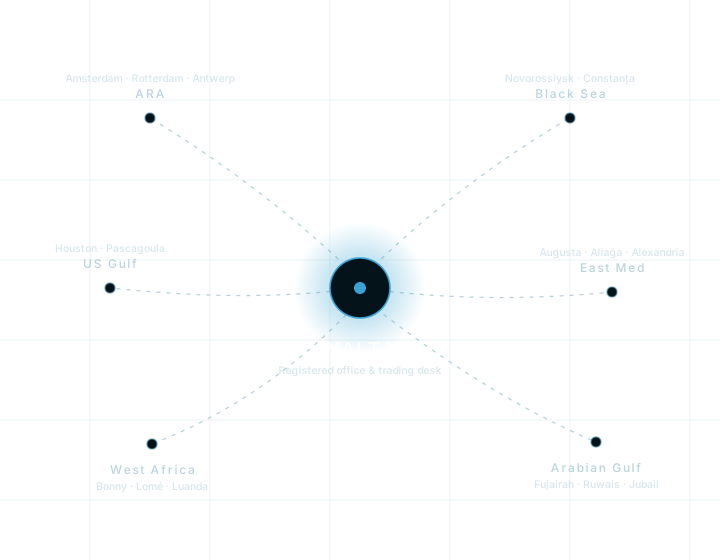
Our coverage follows the barrel flows around the central Mediterranean, with load positions in the Black Sea, North Africa and the Arabian Gulf and discharge into Southern Europe, the Levant, North and West Africa.

  • Malta — registered office and trading desk
  • Load and discharge regions
Note. Ports and regions shown are representative of the flows we work in. The company's actual approved port and terminal list should be substituted here.
Diagram showing trading routes radiating from Malta to the ARA region, Black Sea, Eastern Mediterranean, Arabian Gulf, West Africa and the US Gulf

Mediterranean

Augusta · Milazzo · Fos-Lavéra · Aliağa · Piraeus · Alexandria · Skikda

Black Sea

Novorossiysk · Constanța · Burgas · Batumi

North West Europe

Amsterdam · Rotterdam · Antwerp · Le Havre

West Africa

Bonny · Lomé · Tema · Abidjan · Luanda

Arabian Gulf

Fujairah · Ruwais · Jubail · Sohar

Atlantic basin

US Gulf · Caribbean · Canary Islands (STS and bunkering)

Getting started

What we need to open a file.

Sending these with the first enquiry saves a week. Everything is treated as confidential and used only for counterparty approval.

  1. Certificate of incorporation and trade licence

    Including any change-of-name certificates and the current commercial registration.

  2. Memorandum and articles of association

    With the current register of directors and shareholders.

  3. Ultimate beneficial ownership declaration

    Down to natural persons, with passport copies for holders above the applicable threshold.

  4. Bank reference and banking details

    On bank letterhead, confirming the account in the company's name.

  5. Trade references and audited accounts

    Two trade references and the most recent financial statements where available.

  6. Product requirement

    Grade, specification, quantity and tolerance, delivery basis, discharge port and target laycan.

Start the conversation with the operational detail.

The faster we see the grade, volume, basis and window, the faster we can tell you whether we can do it — and on what terms.